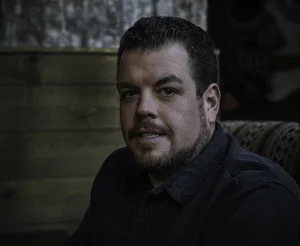
How I Bought My Tahoe City Duplex Off-Market (and How Deals Like It Actually Happen)
The best property I ever bought was never for sale.
In 2022 I bought the Tahoe City duplex I'd been renting — directly from my landlord, off-market, for $810,000. No listing, no open house, no bidding war. I then spent the better part of a year gut-renovating it with local contractors. Today I live in one unit, and the other operates as a highly rated short-term rental grossing about $95,000 a year. The property pays for the privilege of living here.
I'm sharing the story not because it was luck (some of it was) but because the mechanics of it are repeatable — and because "how do I find off-market deals in Tahoe?" is the question I get most from investor clients. So here's the honest version.
Why Tahoe is unusually rich in off-market deals
North Lake Tahoe's housing stock has a specific personality: a lot of it was built in the 60s and 70s, and a surprising amount is still held by the families who bought it decades ago. Thanks to Prop 13, a Tahoe City duplex purchased in 1978 might carry a property tax bill based on an assessed value under $100,000 while being worth over a million today. There is zero tax pressure to sell, so owners don't — until life makes the decision for them: an estate settles, a family tires of long-distance maintenance, a landlord decides thirty winters of snow removal is enough.
When that moment comes, many of these owners never reach the MLS. The house needs work they don't want to manage, they dread the listing-prep circus, or they'd simply rather hand it to someone they know. That's the gap where off-market deals live. It's also why the North Shore's multifamily inventory — the duplexes, triplexes, and cabin clusters — trades quietly far more often than the single-family market does.
I now keep a database of every multifamily parcel on the North Shore, ranked by exactly this logic: how long it's been held and how far its assessed value has drifted from reality. The longer the hold, the more likely the next sale never gets a yard sign.
How my deal actually happened
The unglamorous truth: I was the tenant. I'd been living in the property, I knew its bones, I knew what was wrong with it (a lot), and I knew what it could be. When I approached my landlord, I wasn't a stranger making a lowball offer — I was the guy who'd been shoveling the driveway. The deal worked because both sides skipped the parts of a sale they didn't want: he skipped agent prep, staging, and strangers; I skipped the competition.
That's the real lesson, and it generalizes: off-market deals are relationship deals. They come from being known to the owner — as a tenant, a neighbor, a credible buyer who wrote a letter, or a client of an agent who works the owner list directly. They almost never come from waiting for a Zillow alert.
The house-hack math that makes it work
The duplex structure is what turns a Tahoe purchase from a lifestyle splurge into a business:
Live in one unit, rent the other. My rental unit grosses roughly $95K a year, which transforms the carrying cost of living in Tahoe City. I ran the first two years as a traditional long-term rental — simpler, steady, and a better fit while I was renovating — before shifting to the short-term and mid-term mix I run now. Both models work here; they're just different jobs. (I've published a full breakdown of duplex rental income strategies if you want the detail.)
Owner-occupancy changes your financing. Buying a duplex as a primary residence generally means better loan terms than an investment-property purchase — one of the few genuine edges a regular buyer has over the all-cash crowd. Talk to a lender who actually does 2–4 unit loans; not all of them do it well.
The renovation is where the value gets made. We took the property down to the studs. That's not for everyone, but in a market where most multifamily stock is dated, the spread between "tired 1970s duplex" and "fully renovated duplex" is the widest, most reliable margin in Tahoe real estate. I watched a duplex across the street — same street, same era — go to market with only one unit cheaply redone. It listed at $1.2M and closed at $975K. Condition and story are worth six figures here, in both directions.
What I'd tell a buyer starting today
Decide what you are. A house-hacker who'll live on site, a remote investor who needs management, or a 1031 buyer on a clock — each points to different properties and different jurisdictions' STR rules.
Underwrite before you fall in love. Every property I show an investor gets the same treatment: realistic revenue projection, full operating costs — snow removal is real money here — and honest break-even occupancy. Run your own numbers on my STR calculator; if a deal only pencils at 95% occupancy and peak rates, it doesn't pencil.
Be positioned for speed. Off-market sellers value certainty over price more than you'd expect. Pre-approval in hand, inspection expectations set, flexible close date — that package beats a higher number from a shakier buyer surprisingly often.
Get on the list. Deals like mine surface quietly and go to whoever the owner — or the owner's agent — already knows. Make sure someone in this market knows exactly what you're looking for.
FAQ: buying off-market in North Lake Tahoe
How do you find off-market properties in Lake Tahoe?
Mostly through relationships and direct outreach to long-hold owners — not listing sites. Long-tenured owners with low Prop 13 assessed values are the most likely quiet sellers, and they sell to buyers and agents they already know.
Is a duplex a good first investment property in Tahoe?
For an owner-occupant it's one of the strongest plays in the market: you get primary-residence financing, the second unit's income offsets your carrying costs, and you learn the rental business with your manager (you) living on site.
Do off-market deals cost less than listed properties?
Not automatically — the real advantages are no bidding competition, a negotiable process, and access to properties that would never surface otherwise. Sellers trade some price for certainty and simplicity.
Work the off-market side with me
Finding these opportunities is the core of my practice. I maintain a proprietary database of North Shore multifamily parcels, I contact long-hold owners directly, and when something surfaces that fits a client, that client hears about it before anyone else does — because "anyone else" never finds out.
If you're a Bay Area buyer looking at Tahoe income property — under $1M or above it — tell me what you're trying to do. I've sat on every side of this exact deal: tenant, buyer, renovator, operator, and now agent.
Chris Gallagher is a Tahoe City owner-operator and Realtor® with Timber & Tide Realty Co. (DRE #02439896).